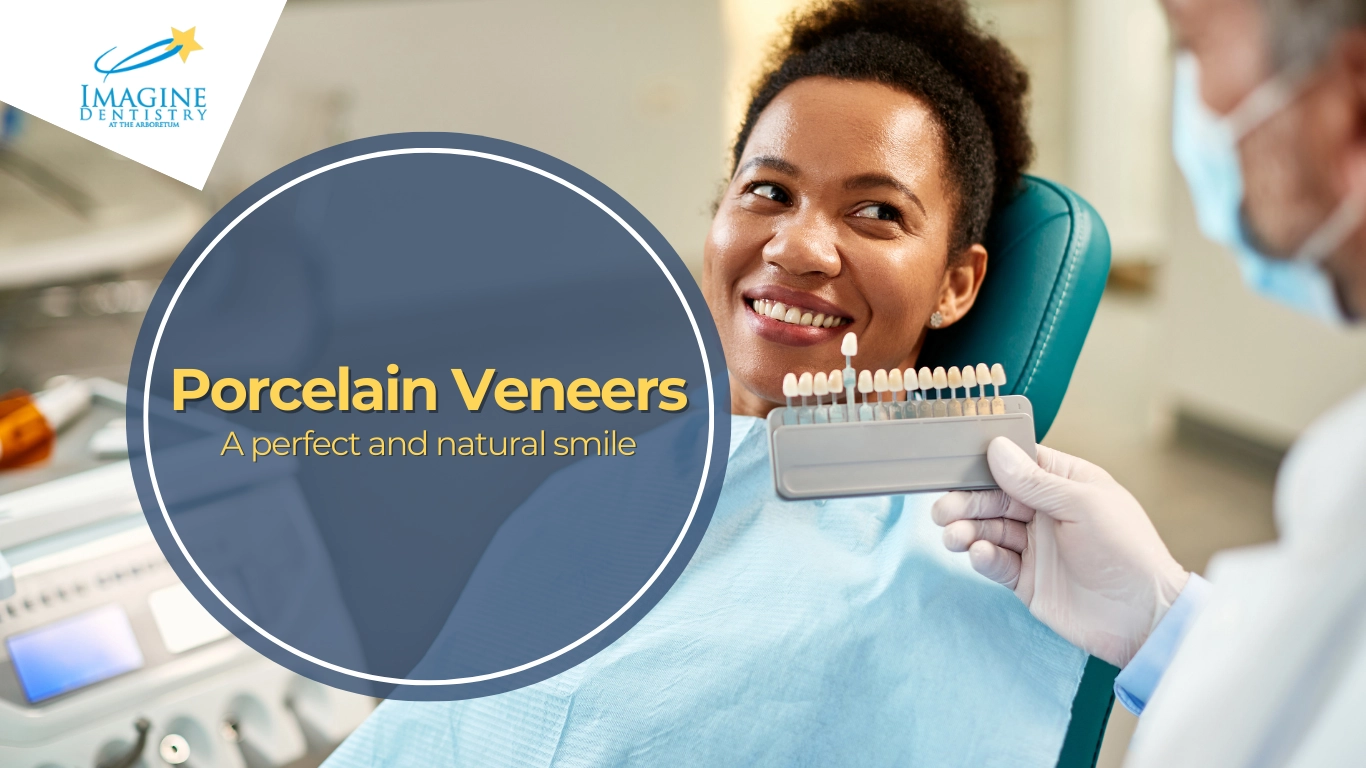
Porcelain veneers are one of the longest-lasting cosmetic treatments in dentistry, and they hold their color far better than natural teeth. A 2021 systematic review of 25 clinical studies covering about 6,500 porcelain veneers found high survival rates. There is one important trade-off to know before treatment, though: porcelain cannot be whitened, so the shade you choose is the shade you keep.
At Imagine Dentistry at the Arboretum in South Charlotte, Dr. Ann Blaine Coambs places porcelain veneers and helps patients plan for how they will look and perform over the long term. Dr. Coambs has more than 20 years of experience and has received the Charlotte Magazine Top Dentists Award every year since 2016. If you are still deciding whether veneers are right for you, start with our guide on who makes a good candidate for porcelain veneers. This article focuses on what happens after they are placed: how long they last, how they hold their color, and what you can do to protect them.
What Are Porcelain Veneers?
Porcelain veneers are thin, custom-made ceramic shells bonded to the front surface of your teeth. They can improve the appearance of stained, chipped, slightly misaligned, or irregularly shaped teeth. Because each veneer is made in a dental lab to match the shape and shade planned for your smile, the finished result looks natural. Placing traditional porcelain veneers usually requires removing a thin layer of enamel, so the treatment is permanent, which is one reason it helps to know what to expect over the years ahead.
How Long Do Porcelain Veneers Last?
With good care, porcelain veneers are a long-lasting restoration. The strongest long-term data comes from a 2021 systematic review published in the Journal of Clinical Medicine and available through the National Library of Medicine, which pooled results from about 6,500 veneers and found high survival rates. You can read the systematic review on porcelain veneer survival for the full findings. The same review found that veneers covering the biting edge of the tooth, and veneers made from non-feldspathic ceramics, had lower failure rates in the pooled data.
No one can promise a specific lifespan for an individual veneer. How long yours last depends on several factors that are partly in your control:
- Grinding and clenching: Nighttime grinding places repeated force on porcelain and is a common reason veneers chip or loosen.
- Oral hygiene: The veneer itself cannot decay, but the natural tooth underneath can, especially along the edges.
- Gum health: Gum recession can expose the edge of a veneer and change how it looks.
- Habits: Biting ice, pens, or fingernails, or using your teeth to open packages, can crack porcelain.
- Regular checkups: Exams let Dr. Coambs catch small problems at the margins before they affect the whole veneer.
Patients who manage these factors well give their veneers the best chance of reaching the upper end of the expected range.
How Resistant Are Porcelain Veneers?
Porcelain is a strong, glass-like ceramic that handles everyday chewing well once it is bonded to the tooth. It is more resistant to wear and staining than composite resin, which is why porcelain veneers usually outlast composite veneers and bonding. Porcelain is still brittle under sudden force, though. A hard impact, a habit like chewing ice, or years of untreated grinding can chip or fracture a veneer. When problems do occur, they are most often a chip in the porcelain, a veneer that comes loose, or decay or gum changes at the edge of the restoration. If you grind your teeth, Dr. Coambs may recommend a custom nightguard to protect your veneers while you sleep.
How Long Do Porcelain Veneers Stay White?
The glazed surface of porcelain resists stains from coffee, tea, red wine, and other common culprits much better than natural enamel, so veneers keep their shade for many years. No material is completely stain-proof, however. The bonding cement along the edges of a veneer can pick up some color over time, and a rough or damaged surface can hold stains more easily. Professional cleanings and polishing help keep those edges looking clean.
The bigger color change usually happens in the teeth next to your veneers. Natural teeth that are not covered by veneers can gradually darken with age and diet while your porcelain stays the same, which can create a slow mismatch over the years.
Can Porcelain Veneers Be Whitened?
No. Whitening gels work by lightening natural enamel, and porcelain does not respond to them. The American Dental Association’s MouthHealthy guide to teeth whitening states that whitening will not work on veneers, crowns, or fillings. This has two practical effects on your treatment plan.
First, if you want a brighter smile overall, whiten your natural teeth before your veneers are made. Dr. Coambs can then match your veneers to your new, brighter shade. Our guide on how to prepare for teeth whitening explains that process step by step. Second, if your natural teeth darken years after your veneers are placed, touch-up whitening of the natural teeth can sometimes bring them back in line. If the difference is too large, replacing a veneer may be the only way to change its color. Our article on teeth whitening with veneers, crowns, and bonding covers these sequencing decisions in more detail.
Signs a Veneer May Need Repair or Replacement
Most veneers give plenty of warning before they fail. Contact our office if you notice a chip or rough edge, a veneer that feels loose or shifts when you bite, a dark line or stain at the gumline, new sensitivity in a veneered tooth, or a shade that no longer matches the teeth around it. A small chip can sometimes be smoothed or repaired, while a loose veneer may be rebonded if the veneer and tooth are both sound. Larger fractures or decay under a veneer usually mean the restoration needs to be replaced. Because enamel was removed when the veneer was placed, that tooth will always need some form of restoration going forward.
Are Porcelain Veneers Difficult to Maintain?
Caring for porcelain veneers is straightforward. Brush twice a day with a soft toothbrush and a non-abrasive toothpaste, clean between your teeth every day, and keep up with regular cleanings and exams. Avoid using your teeth as tools, and wear a mouthguard for contact sports. For a full breakdown of daily care, products to avoid, and habits that can shorten the lifespan of your veneers, see our complete guide to maintaining your dental veneers.
Are Porcelain Veneers Expensive?
The cost of porcelain veneers depends on how many teeth you are treating and the complexity of your case. Because veneers are usually considered a cosmetic procedure, most dental insurance plans do not cover them. When you consider that well-maintained porcelain veneers are designed to be durable, many patients view them as a long-term investment. Imagine Dentistry offers financing through CareCredit and Cherry, as well as our in-house Membership Plan, and our team can review the estimated cost of your treatment plan at your consultation.
Why Choose Imagine Dentistry at the Arboretum for Your Porcelain Veneers?
Dr. Ann Blaine Coambs brings more than 20 years of experience, continuing education through The Dawson Academy, and a focus on how your bite affects your restorations to every veneer case. That attention to the bite matters for longevity, because veneers placed on a smile with uncontrolled grinding or an unstable bite are more likely to chip. Patients visit our Arboretum office from across South Charlotte and nearby communities such as Matthews, Mint Hill, and Pineville.
If you would like to talk about how long veneers could last for your smile, or whether to whiten before treatment, request an appointment online to schedule a consultation with Dr. Coambs.
FAQs About Porcelain Veneers
With good care, porcelain veneers are a long-lasting restoration. A 2021 systematic review of about 6,500 porcelain veneers found high survival rates. Grinding, oral hygiene, gum health, and habits like chewing ice all affect how long an individual veneer lasts.
Porcelain is highly resistant to staining, so veneers keep their shade far better than natural enamel. The bonding cement at the edges can pick up some color over the years, and natural teeth next to your veneers may darken with age. Regular cleanings and polishing help keep veneers looking bright.
No. Whitening gels only lighten natural enamel, and the American Dental Association notes that whitening will not work on veneers, crowns, or fillings. If you want a brighter smile, whiten your natural teeth before your veneers are made so they can be matched to your new shade. Changing the color of an existing veneer usually means replacing it.
Placing porcelain veneers is generally comfortable. Local anesthetic is available while a thin layer of enamel is prepared, and most patients report little discomfort. Some people notice mild sensitivity to hot or cold for a few days afterward, which usually fades on its own.
Veneers can improve the appearance of slightly crooked or uneven teeth and create the look of a straighter smile. They do not move teeth, so more significant crowding or bite problems are often better treated with orthodontics first. Dr. Coambs can help you weigh which approach fits your goals.
The cost depends on how many veneers you need and the complexity of your case, so pricing varies from patient to patient. Veneers are usually considered cosmetic and are rarely covered by dental insurance. Imagine Dentistry offers financing through CareCredit and Cherry, plus an in-house Membership Plan.